This grew
out of something I'm attempting to write about my experiences in Tallahatchie County, MS, or the Free State of Tallahatchie, as they like to call it (and it's NOTHING like the Free State of Jones). The small book I'm working on is generally light-hearted with only a few gritty tales and this one grim
one I've been struggling with for several years. I don't think the main topic here is the shocking thing it once
was, since we've been shocked so many times recently. Any
reasonable American is likely to read it and say "Duh" at this point,
but I need to get this particular piece of knowledge out of my head and out of
my late night wakefulness.
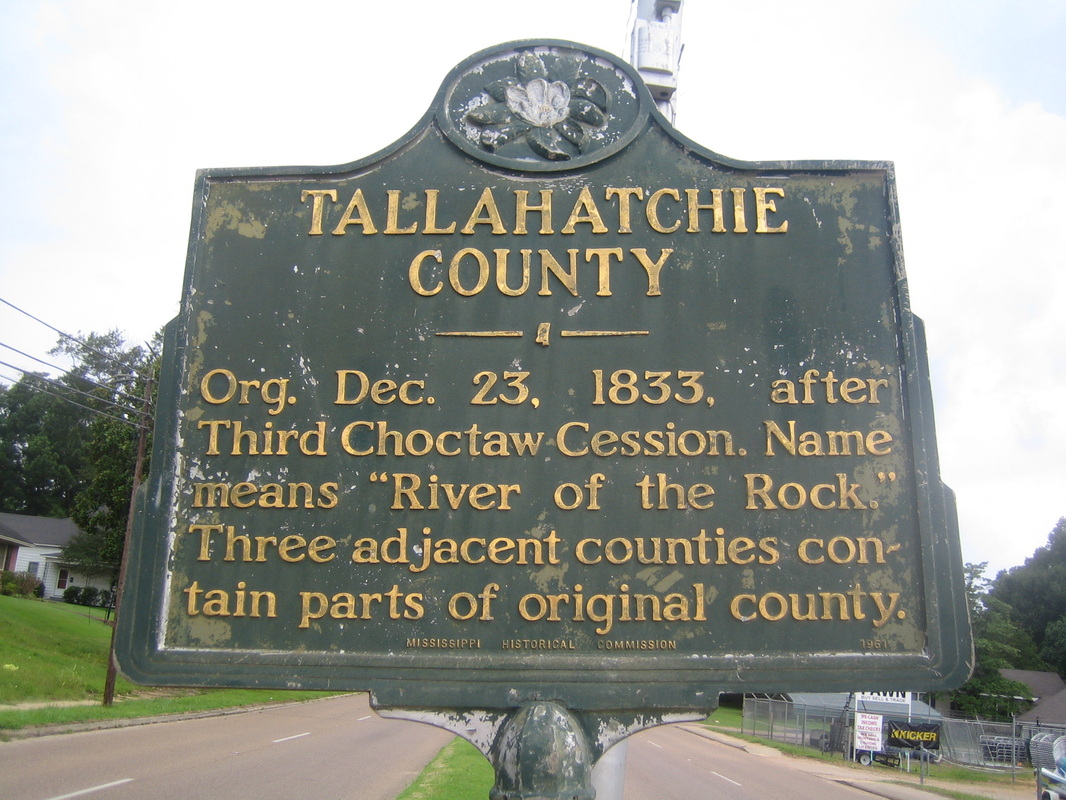 I lived in Tallahatchie
County for less than 3 years among my kinfolk on land that had been in the
family since the Treaty of Dancing Rabbit Creek, 1830-1831 (when the Choctaw
were removed to Oklahoma in the Choctaw
Trail of Tears). I'm writing all this background to provide context.
I lived in Tallahatchie
County for less than 3 years among my kinfolk on land that had been in the
family since the Treaty of Dancing Rabbit Creek, 1830-1831 (when the Choctaw
were removed to Oklahoma in the Choctaw
Trail of Tears). I'm writing all this background to provide context.
My
ex-husband and I bought my Aunt's farm when she was in failing health, with the
stipulation that she would live there until she died and that I would assist
her as she needed. She was still sharp as a tack and living alone, but had
experienced some serious heart problems.
My ex-husband was working on a
river towboat and we could therefore live where we pleased as long as we pleased to live reasonably close to the Mississippi river, since
his employer paid for travel to and from their towboats.
I had
always loved that farm and had spent many happy hours as a child sitting in Aunt
Rosa's mimosa tree (with the perfect low-growing limb) by the back steps while
I read some of her huge stash of Life,
Look, Saturday Evening Post, etc. I
occasionally took some chopped corn up there to feed the chickens, and when I
tired of those pleasures, I ran around
the pastures near her house and climbed the gullies that were there when I was
a child.
I had been
visiting Mississippi with my family since I could remember, and had spent a lot
of time on that farm, but I had an idealized and romanticized idea of this place where I
was going to live. This was the land of our ancestors, where my parents were
born and raised, and this farm was the land of all those
fond childhood memories.
My views were considerably different than those
of my family and most of my childhood friends, even though, to the best of my
recollection, while I may have seen an
occasional Black person on the streets, I had never actually had any real interaction
with Black people before I was living on my own in Memphis in the late 60's. My school was not integrated other than one
child the Navy insisted they accept because she was not "negro", she
was "Puerto Rican". Since the
Navy payment per enrolled child made up most of the budget of our local school and
they threatened to withdraw all their funds if she was not accepted, she was reluctantly enrolled. She was several years younger than I was, but I remember seeing her
being pursued through the playground by a pack of mean little kids calling her
names, chiefly, n****r, and making fun of her looks, and saying every other
nasty thing that little kids are prone to use to harass other little kids,
only, as you can imagine, worse. I was bothered and knew it was wrong, but I didn't have the courage to call down those younger children.
I attribute
a lot of my differing opinions on racial matters to all those magazines I read at
my Aunt Rosa's. That's where I first read about the children (some near my age)
who were integrating the Little Rock, AR schools in 1957. News on local TV
(when we got a TV) was pretty censored in the south, and my parents didn't want
us watching too much news, either from the urge to protect us or to keep some
of those damnyankee ideas out of our
heads.
 Now, closer
to the point of this piece. . . when we
moved to Tallahatchie County, one of the first people I became acquainted with was
my nearest neighbor, an older man named Travis Thomas. I remembered him from yearly visits to
Memorial Day/Homecoming (at the New Hope Church and Cemetery) as a child. This
was a sort of combination yearly family reunion / potluck / grave cleaning
occasion. Mr. Thomas was simply one of the grown-ups then, I don't recall even
talking to him before I moved to Tallahatchie County as a young adult. He was both gregarious and garrulous to the
extreme and would often stop by to talk when I was living just up the road from
him. He was an unforgettable character, but not in a pleasant way. My function seemingly was simply to be his
listener. During the first conversation
we had, he informed me that he was a first
cousin to both my mother and my father, from different sides of the
family. I have to say here that there
are innumerable familial interconnections in Tallahatchie County and I'm
convinced that I am kin to nearly everyone in that county, either from one side
or the other, or both. After living there and having nearly every older person
I met try to trace kinship with me, I was often lost in a maze of cousins twice
or thrice removed and never quite understood the math of the connections, even though I agreed with the proposition that
we were kin.
Now, closer
to the point of this piece. . . when we
moved to Tallahatchie County, one of the first people I became acquainted with was
my nearest neighbor, an older man named Travis Thomas. I remembered him from yearly visits to
Memorial Day/Homecoming (at the New Hope Church and Cemetery) as a child. This
was a sort of combination yearly family reunion / potluck / grave cleaning
occasion. Mr. Thomas was simply one of the grown-ups then, I don't recall even
talking to him before I moved to Tallahatchie County as a young adult. He was both gregarious and garrulous to the
extreme and would often stop by to talk when I was living just up the road from
him. He was an unforgettable character, but not in a pleasant way. My function seemingly was simply to be his
listener. During the first conversation
we had, he informed me that he was a first
cousin to both my mother and my father, from different sides of the
family. I have to say here that there
are innumerable familial interconnections in Tallahatchie County and I'm
convinced that I am kin to nearly everyone in that county, either from one side
or the other, or both. After living there and having nearly every older person
I met try to trace kinship with me, I was often lost in a maze of cousins twice
or thrice removed and never quite understood the math of the connections, even though I agreed with the proposition that
we were kin.
Mr. Thomas,
like many others, seemed to mostly want to talk about family ties, family
stories and claims to fame, and his own superior
knowledge and acquaintance with a wide range of people. We clashed quite early
on when I objected to his frequent use of the "n" word, something over which I'd been fighting
with my immediate family for years. Unfortunately, it seemed to only spur him on when I objected, and he
informed me that he was too old to learn any different, and became an even more
prolific user of that and other derogatory language. In reaction, I became adept at finding urgent
matters that needed my attention, or disappearing into the pasture if I was
lucky enough to see him coming.
I was
caught off guard on too many occasions and while I endeavored to be polite and
cordial to my kinsman and nearest neighbor (other than my Aunt, who was immediately next door), it was seldom
easy to listen to him. My aunt, on the other hand, did not indulge in the
spiteful use of offensive language once
I expressed my feelings on that subject. I'm sure she had her thoughts, but she
did not harass me with them. His land abutted ours on one edge, just
around the curve of the road, quite close for that rural area at the time.
He was
there in my yard one time expounding on what had become his favorite topic with
me - the methods people in the area used to control the n*****rs or what he
called the "Kneegrow" problem. He began a rambling tale of how my
mother's other cousin, who was a deputy, would take the smart mouths out behind
the jail and beat some manners into them. I'm deliberately using some of his
language to give you the flavor of those diatribes. All through it, I was thinking of my suspicion
that said cousin beat manners into his wonderful sweet-natured wife as well, when he
was the one who needed the lessons, and I didn't doubt it was the same with any Black folks in his control. That time, I remembered something I had left baking
in the oven and I had to cut the conversation short while I ran to check it. It
took me so long to handle that problem in the oven that he finally gave up and went to talk
to my aunt (who didn't seem all that keen on talking to him, either).
The next
time he caught me out in the open where I couldn't disappear without being outright rude,
he seemed determined to finish making the point he'd started making before. In the course of this one-sided conversation, he informed me that he "knew he was a man" when his father took him to a hanging when he was 12. I was caught so off
guard by this statement that all I could do was gape at him. When I was able to get in a word edgewise, I asked
what hanging he was talking about. He
sort of flicked his head over his shoulder to the right, and said "where
we hung that n****r". I took it to
mean either the piece of our land behind him, or further on to his land, which
lay in that direction, too. I just stood
there in horror and asked "What did the man do?" The reply was to the
effect that he had said the wrong thing to a white woman. I really don't know where the conversation
went after that or how I got away, I was in a state of some shock. I'm just sorry that was not the last of what
he apparently thought of as "schooling" me. I redoubled my efforts to stay away from him,
because I didn't want to hear any more.
The next
episode I remember was the one where he truly struck me dumb for a short time (and
there were lots of other more aimless and less disturbing visits, but these are
the ones that I remember vividly). He
could be very sly, and on this occasion, I knew something bad was coming when
he cut his eyes sideways at me while he rocked back and forth on his heels,
thumbs in the sides of his overalls. It
was body language that had become all too familiar over the last few months.
"I bet
you didn't know that some of our relatives are famous, did you?"
"No, I've never heard that before,"
I replied, warily.
Now he was
rocking forward and back on his heels, in excitement and self-satisfaction, and
he just beamed at me.
"Yep,
we're kin to one of them guys who took care of Emmet Till." As enlightened as I thought I was, the name
was familiar to me, but I couldn't remember why. I'm sure I looked as puzzled as I felt, while
I searched my memory. He expounded on the subject until I realized that this
was the child who had been killed nearly 20 years before in Mississippi, west of us in Money, a very small town
in Tallahatchie County, but in the edge of the delta. I don't remember what if anything I may have said to
him, I just remember staring, with my heart pounding, and bile in my throat.
There was
no internet then, so as soon as he left I got myself cleaned up and dressed to go into Charleston. I
went straight to the library to dig out what little they had on Emmett Till (not much in that era) and read
it while I fought the physical and mental distress my body was feeling.
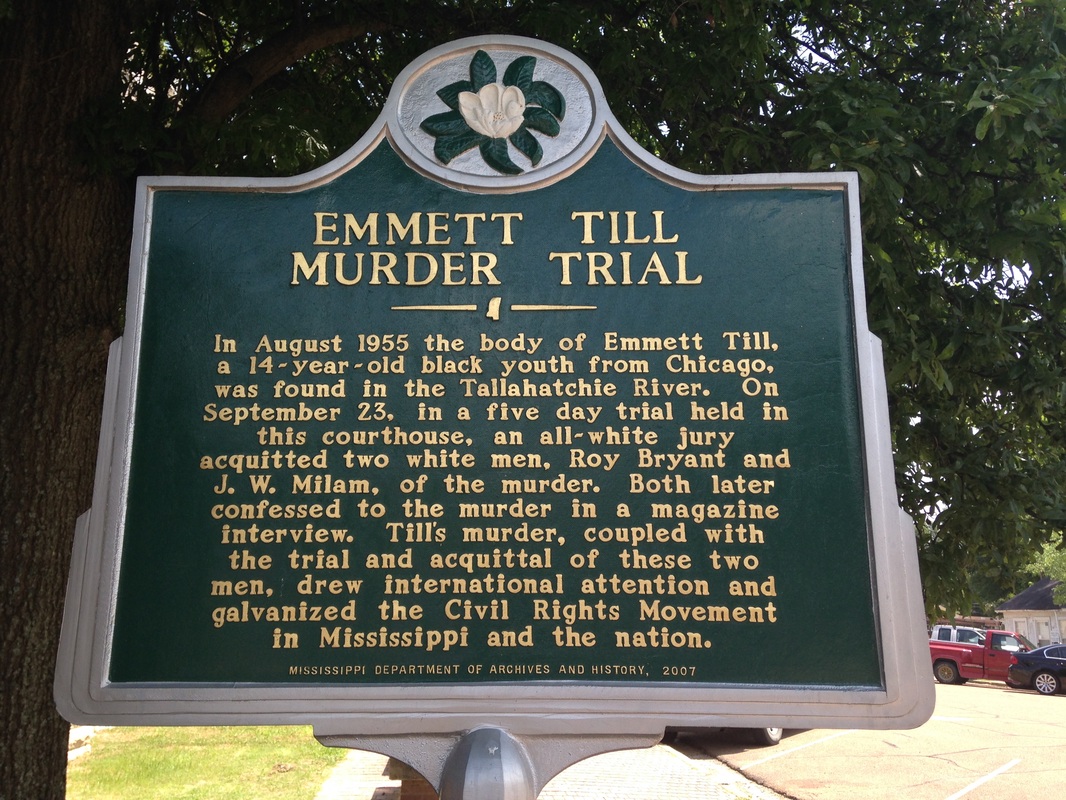
I can
hardly believe I knew so little about what happened to Emmet Till at that time. I had to sit and figure out how I had gotten
that far in life that clueless and
ignorant. I tried to put it in some context by the year. He was killed in 1955,
when I was nine years old, and recovering from a life threatening burning that
kept me in hospital and at home for 12 weeks.
I don't remember a great deal from that Christmas Eve I was caught on
fire by a neighbor's child trying to give me a "hot seat" with a
sparkler, or during the long recovery time. I go back to the remembrance of how little we
(my sister and I) knew about current affairs.
I'm sure not much on the news had penetrated my mind then, but I don't
know how I escaped more than just a minor surface knowledge of this until my
late 20's.
I never
asked Mr. Thomas which one of them was related to us, but after an uncle
published two painstakingly-researched genealogy books, I did see a Milam listed as a
distant relative (although not that particular Milam). This was a last name I was familiar with in
families nearby, who were probably not closely related to THAT Milam either. I also found some O'Bryants, but not any Bryants.
This thing
Travis Thomas bragged about to me was a culmination of other horrors he was
proud of, and he made this a time of earth-shattering revelation to me. I began researching, reading and thinking
about race relations in more earnest than I had before.
Meanwhile, my
aunt died of a heart attack, and these terrible things I'd been told haunted me
while I lived on the place I used to
love so dearly. When passing by the
large old oak tree in the pasture near the line between the two properties, I
would get chills and worry that this might have been the site of the hanging I
was told of, even though I'd never been
able to bring myself to ask him for more details. I had noted it was down-hill
and behind him when he did the head tilt over his shoulder. I don't have any proof that was the tree, or
even if he was telling the truth or just telling a tale to shake me, but I
couldn't get past the idea that it was true, and I was never comfortable living
there afterwards. I had to leave.
I moved in
1977, but often went back in my mind to the story about Emmett Till and my
purported but unproven distant kin.
Fast
forward to somewhere near the turn of the century, 2000. I became involved in some antiracial
activities associated with the fledgling William Winter Institute for Racial
Reconciliation, the first time I'd become involved with a movement formally
tackling racial healing. I say healing, because I don't really care for that
word "reconciliation" which means "to restore to friendship or harmony."
How can you restore what never was?
Through
that first ill-fated fight to change the Mississippi flag, I became acquainted
with a woman who was, at that time, on the staff of Jackson State University, and was working
on a database for people to find out what happened to their relatives who just
"disappeared" and/or supposedly ran off, never to be heard from again. A lot of these were said (by whites trying to
cover up their misdeeds) to be just "trying to cause trouble" like the rumors white authorities spread that
Schwerner, Chaney and Goodman were just pranking people by disappearing. I
related the above story to her, and she asked me to speak out about it and see
if I could help someone find out what happened to their loved one. I was so
ashamed that my family might be involved in something so repulsive that I could
not do it, and I did not want to drag my elderly parents through the kind of
mud that might entail. I am ashamed I did
not have the courage and I apologize to both her and to anyone who might have gotten some small measure of closure had my information helped them find out what happened to their relative and/or ancestor.
It
nagged at me for years and years and finally, a while back, I did some internet research on this. I was looking for lynchings
in Tallahatchie in the period in which Travis Thomas would have been 12 years
old. In order to do that, I needed his birth date. Trying to google his obit, I typed his name and Tallahatchie County and the first thing that popped up was not an obituary,
it was a website about Emmett Till and the trial of the two men, Bryant and
Milam. It came up because Travis Thomas was on the jury, and
his name shows up in many links, and photos. Finding these hit me like
a ton of bricks. I'm not sure why finding out he was on that jury made me so angry, angry beyond
reason, but I'm sure some of that anger was at myself. Seeing that face again brought it all back as
clearly and wretchedly discomforting as if I were back in the early 70's and just finding a
very nasty skeleton in my family closet.

He's in the back row of the jury, at the left when
they are facing the camera. I have no
idea why he didn't brag about being on this jury after what he had bragged about. The jurors were asked if they knew either man
or if they had any bias and all apparently claimed they didn't know them and
didn't have any bias. All I can surmise
is that Travis Thomas wanted to tell me his own claim to fame and he came so
very close. I believe he wanted to both brag
about it, and to rattle my cage and I'm just surprised in retrospect that he
didn't tell that final part, too. Maybe it's because I moved
before he finished with me, or maybe he was reluctant to admit doing something likely provable as
illegal; I can only guess at that.
Quoted from the Famous Trials Website:
Jury selection began on September 19 and finding twelve unbiased jurors would not be an easy task. One prospective juror, Robert Smith, neatly described the problem when asked whether he had a "fixed opinion" in the
case. Smith answered, "Anybody in his right mind would have a fixed
opinion." In 1955, none of the black residents of Tallahatchie County
were registered voters and thus, under the jury selection rules then in
place, no black was eligible to serve as a juror. During the six hours
of jury selection, the county's sheriff-elect assisted the defense team,
advising the lawyers as to which jurors were "doubtful" and which were
"safe." All of the twelve white men seated for the jury seemed safe. One
of the defense attorneys said later, "After the jury was chosen, any first-year law student could have won the case."
It does, at
least to me, lend some credence to the
veracity of what he told me about a black man being hanged in the Murfreesboro
community when he was 12. I have tried
to find a reference in online sources to a lynching in Tallahatchie County in
the years in which he might be 12 or close to it, without success. He would
have had his 12th birthday on July 11, 1919 and if he was 12 when this
happened, it could have been the last half of 1919 or the first half of
1920.
So, was he
just telling a tale, was the age he quoted a loose estimate or was this just
one of many lynchings that is not delineated on the online lists I was able to
access? I can't tell, but I do know that
this kinsman of mine and the others with him did not belong on that jury.
My
apologies to anyone who may be seeking information on a possibly lynched
ancestor, you deserve more from me and my ilk. I will even apologize to a
minuscule degree, to descendants or any living relatives because I know this
will humiliate and embarrass them unless they are absolutely beyond the pale. I'm mostly sorry that it took me so long to
speak about matters that have troubled me for more than half my life. I wish
there were a searchable database of lynchings and possible lynchings with names
(when available) and locations available for people looking for their family
members and ancestors. I went through a
couple of different web pages with names, dates and places of lynchings, but
they are not in a database form (and in one case the place names in MS are
frequently misspelled and possibly just incorrect), and they were listed in no real
order, neither chronologically or alphabetically, and only somewhat geographically in order. The research was
done by volunteers who had limited time and resources and someone with computer
knowledge today would be hugely helpful if the information was combined and
ordered in a database. Perhaps someone is working on it already (I do hope so).
I hope I
have written this with enough coherence and organization that it may be useful
to someone other than just to me and my own mental well-being, but it has been
a cleansing of sorts for me. I realize pretty well everyone has
known for years how absurd that trial was and how impossibly packed with bias
that jury was.
I have a
few words from the grave for those of
you who have complained to me about what they perceived as my obsession with
matters of race (that they believe should be left alone). Perhaps you'll
understand my "obsession" better now, or perhaps you'll just shrug
your shoulders and repeat that old canard that racial problems will just go away if we stop
talking about them. I quote you a line that Mr. Thomas himself frequently used when he disagreed with me. He would shrug and say, "All right, then, that's with you."


